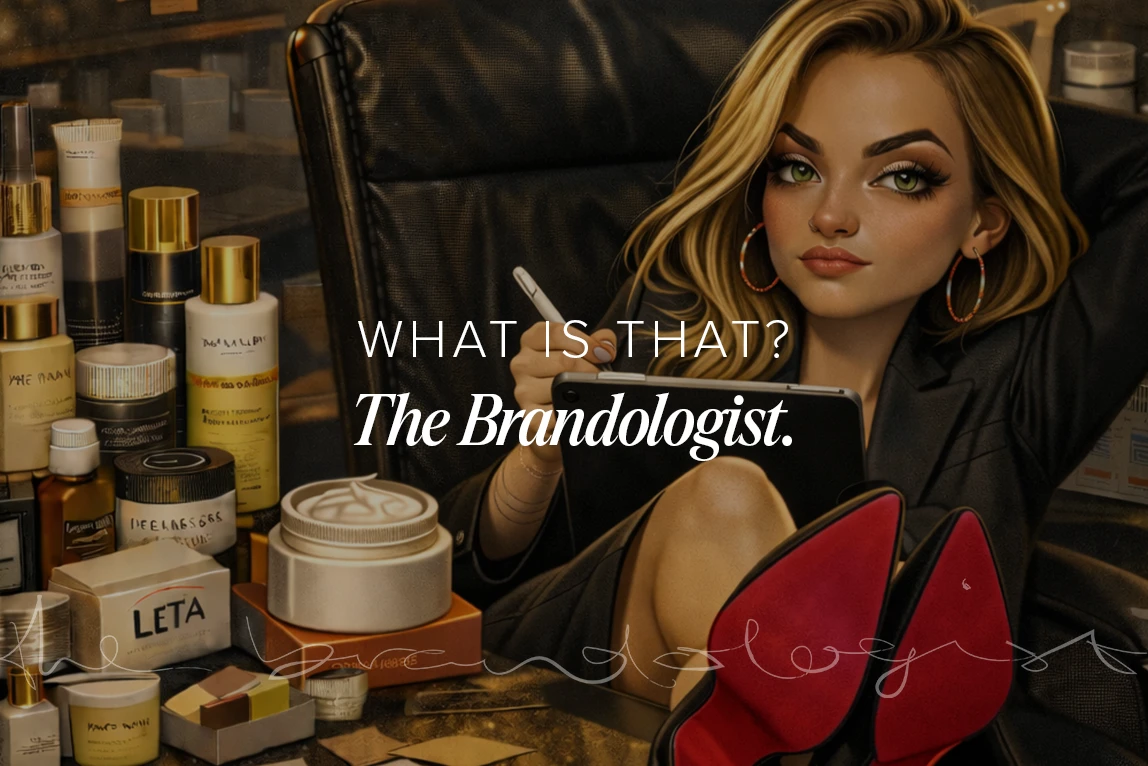
The term Brandologist didn’t come from a boardroom brainstorm or agency pitch deck.
I’ve always had a fixation on psychology. I studied it at uni 10 years ago, and I’ve been the person who naturally nerds out on how people think, decide, trust, judge, and buy. Even when I was working as a designer, psychology was the part I cared about more than the templates or deliverables.
But life has a way of creating rare moments of stillness.
After major surgery left me bed-bound for weeks, I finally had the space to look at my work without the noise of deadlines and client calendars. I was ready to show the depth that had always been there.
Between recovery naps and heat packs, I found myself returning to the things that had always lit me up:
• behavioural science
• cognitive bias
• perception and value
• why some brands earn trust instantly
• why others never break through
• how design changes behaviour
Everything I was already doing made more sense when I stopped pretending branding was just “design” and admitted what it actually was: applied psychology.
And that’s when the word landed.
Brandologist.
A name for the intersection I’d always lived in — strategy, psychology, and design.
It stuck.
And it became the language for the work I’d already been doing all along, just finally recognised for what it was.
What a Brandologist Actually Does
1. Studies how people think, choose, and behave
Most branding ignores how human decision-making actually works.
A Brandologist builds strategy around:
- cognitive biases
- emotional triggers
- perceived value
- trust formation
- buying psychology
- price justification
2. Builds premium positioning from the inside out
High-end brands aren’t premium because they look expensive.
The incredible detail involved in creating the whole brand experience is what luxury thrives on.
A Brandologist ensures every touchpoint signals:
- certainty
- authority
- desirability
- emotional clarity
- commercial confidence
3. Fuses strategy and design into one intelligent system
Strategy without design lacks impact.
Design without strategy lacks meaning.
A Brandologist blends both:
- brand strategy
- messaging + narrative
- visual identity
- packaging + product psychology
- digital experience
- customer journey mapping
- creative direction
Everything is aligned.
4. Creates brands that behave, not just brands that are pretty
Brand behaviour is the real differentiator.
A Brandologist shapes:
- how your brand speaks
- how it moves
- how it’s perceived
- how it persuades
- how it holds a customer
- how it sells without shouting
This is branding that leads, not follows.
Who a Brandologist Is For
Brands that want to:
- command a premium position
- stand out in saturated markets
- create psychological certainty
- attract the right audience
- move from “nice visuals” to commercial performance
- scale, grow, or evolve
- act and present like a serious brand, not a hobby
Beauty and skincare brands thrive in this approach.
So do luxury goods, wellness brands, founder-led products, tech, lifestyle, and any business where perception equals profit.
The industry is full of designers, strategists, coaches, and “brand experts.”
Very few work at the intersection where behavioural psychology, strategy, and design meet.
Why “Brandologist” Matters
A Brandologist:
- thinks like a strategist
- analyses like a behavioural scientist
- designs like a creative director
- positions like a marketer
- and executes like someone building long-term commercial equity
It’s branding with intellect, intention, and impact.
The Brandologist Difference
You get a brand designed to:
- convert
- differentiate
- attract desire
- hold attention
- communicate value
- justify your price point
- build lasting equity
Branding that knows exactly who it’s speaking to and why it works.
That’s what a Brandologist does.